

Exports - Products
MAIZE / CORN
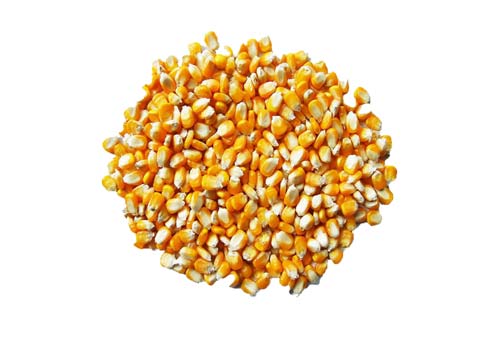
Pharmaceutical Name -Zea mays | Plant Family - Poaceae
Grades - Grade 1 ( Non-GMO),
Grades - Grade 2 ( Non-GMO),

Maize is widely classified as a whole grain food, like wheat, oats, and barley. Corn is grown around the world and is one of the globe's most widely used food staples, Corn varieties are directly used for food and animal feed or processed to make food and feed ingredients (such as high fructose corn syrup, cornstarch and lysine) or industrial products such as ethanol and polylactic acid(PLA), corn oil which is extracted from corn germ. Corn is also used as an animal feed grain,
Here in Sri Lanka we produce around 200,000 MTs per year, out of which we have a domestic consumption of 180,000 MTs. Unlike most Maize producing countries the Sri Lankan Maize is Non Genetically Modified(non-GMO).
Packing
As per customer requirement
Main Markets
USA, Mexico, Canada, India, United Kingdom,Middle East Countries, European Union Countries, Australia
SOYA BEAN
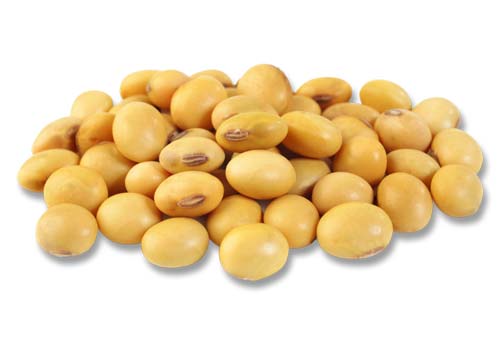
Pharmaceutical Name -Zea mays | Plant Family - Poaceae
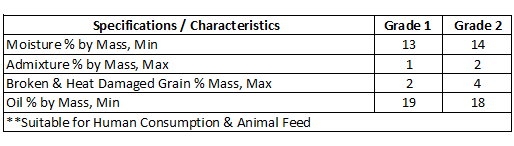
Grades - Grade 1 ( Non-GMO),
Grades - Grade 2 ( Non-GMO),
Soya bean belongs to the legume family and is native to East Asia.Soya beans were cultivated in several countries such as Japan,Indonesia, Philippines, Vietnam, Thailand, Malaysia, Burma, Nepal, India and Sri Lanka. They have been an important protein source in the Orient for over five thousand years. A land cultivated with soybeans can produce much more protein than any other crop. Soya-Based Infant Formula (SBIF) is used for infants, children and adults who are lactose intolerant - an allergic condition to cow's milk and dairy products, It is sold in powder, ready-to-feed and concentrated liquid forms. In Sri Lanka we produce Infant supplements in solid form which are called "Triposha" and "Samaposha
Packing
As per customer requirement
Main Markets
Taiwan, China, Korea, Singapore, Vietnam, Canada, Japan, Middle East Countries & Europe
SESAME SEEDS
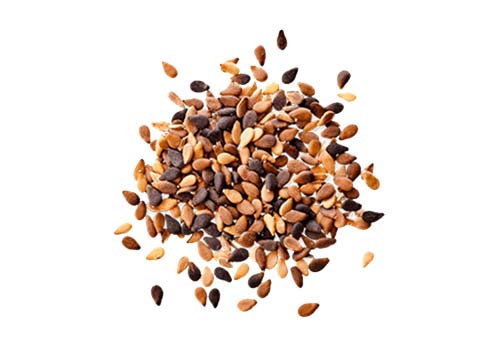
Pharmaceutical Name -Sesamum indicum | Plant Family - Pedaliacem
Grades - Grade 1 ( Non-GMO),
Grades - Grade 2 ( Non-GMO),

Sesame plants are grown extensively in Asia, particularly in Sri Lanka Burma, China & India, If is also one of the main commercial crops in Nigerla, Sudan and Ethiopia, le grows to about 5 feet tall and bear: plenty of pink white foxglove type flowers. The pods apgear soon containing while, brown, or back seeds depending upon the cdtinasion In Sri Lanka we grow sesame as "Chana" cultivation, which are free of pesticides and organic. Sesame seeds are small, almost oblate in shape featuring a pleasant nutty flavor and high all content They come in a host of different colors, depending upon the variety including white, yellow, black and red, Sesame seeds are highly valued for their high content of oil, Sesame oil is very resistant to rancidity Sesame seeds are the main ingredients in both tahini/ ahant'" and "halvah" a Middle pastern sweet treat.
Packing
As per customer requirement
Main Markets
Taiwan, China, Korea, Singapore, Vietnam, Canada, Japan, Middle East Countries & Europe
CLOVES
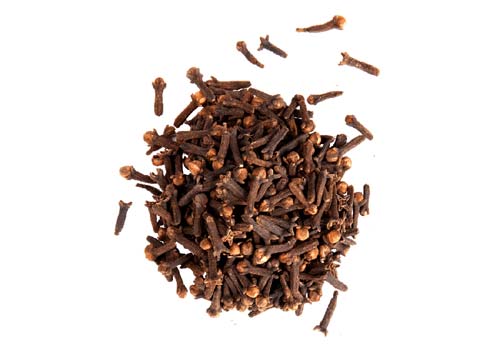
Pharmaceutical Name -Flores Coryophyll | Botanical Name -Eugenia caryophyllata, Caryophyllus aromaticus | Plant Family - Myrtaceae (myrtle fornily)
Grades - Hand Picked, Grade 1, FAQ Grade , Clove Stems

The Clove tree (Caryophylus C.) is an evergreen which can grow up to a height of 8 to 12m, wth large square leaves and sanguine lowers in numerous groups of terminal clusters, The flower buch which initially are pale gradually become green, when they develop Into bright red they are ready for collecting. Strong. pungent, and sweet cloves are harvested when 1.S to 2 cm long, and consist of a long calyx, terminating in four spreading sepals, and four unopened petals which form a small ball in the center
Ground Cloves add spicy depth to gingerbread, cookies, muffins, cakes, and other sweets, It's the secret ingredient in barbecues and cocktail sauces, Sri Lankan Cloves command a premium price in the world market for its quality and consistency
Packing
As per customer requirement
Main Markets
USA, Mexico, Canada, India, United Kingdom, Middle East Countries, European Union Countries, Australia
BLACK PEPPER

Pharmaceutical Name -Fructus Pipers nigri | Botanical Name -Piper Nigrum | Plant Family - Piperaceae (pepper family)
Grades - Grade 1 (550g/), Grade2 (500 g/1), Light Bemies (450g/l - 350g/l)
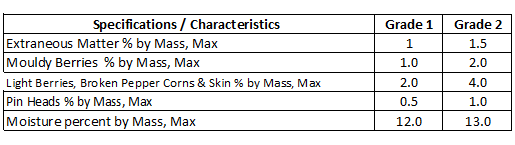
Pepper is picked from a vine, which can grow up to ten feet tall and is indigenous to Asia. Pepper is the dried berry of Piper Nigrum which is picked about nine months after flowering. Black Pepper are berries that are picked unripe. White Pepper is made with ripened berries and soaked so that their outer skin is easily removed.
Since ancient times dried ground pepper has been used for both its flavor and as a medicine. It is one of the most common spices added to European cuisine. The chemical piperine is responsible for the spiciness of black pepper. Sri Lankan Pepper is known to be one of the finest
Packing
As per customer requirement
Main Markets
USA, UK, Turkey, Spain, India, Middle East
NUTMEG & MACE
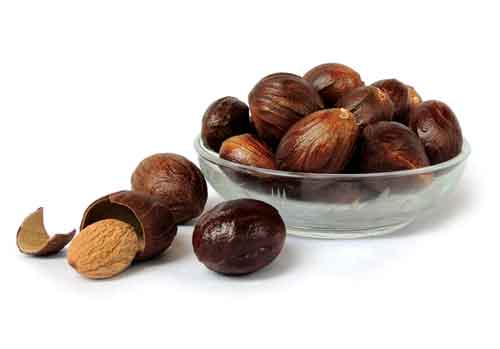
Pharmaceutical Name -Semen Myristicae | Botanical Name -Myristica fragrans
Nut Meg Grades - Nut Meg With Shell, Nut Meg Without Shell. NutMeg BWP
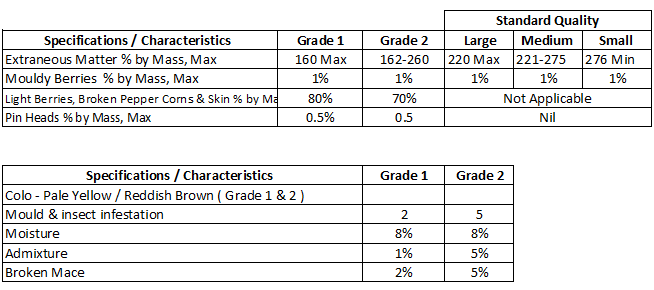
An evergreen tree that grows up to 60 feet tail, Interestingly, the tree produces both Nutmeg and Mace. This is the only tropical fruit that ie the source of two different spices. The mature dried seeds of Myristica fragrans are exported both shelled and de shelled. Several other commercial products are also produced from the tree, including Essential Oils, Extracted Oleoresins, and Nutmeg Butter.
Mace is the ground outer covering (aril) of the nutmeg seed. Mace shall range from pale yellow to reddish brown in colour. Mace has a flavor and aroma similar to nutmeg, with slightly more pungency
Packing
As per customer requirement
Main Markets
USA,India, Middle East, Europe
ARECANUT
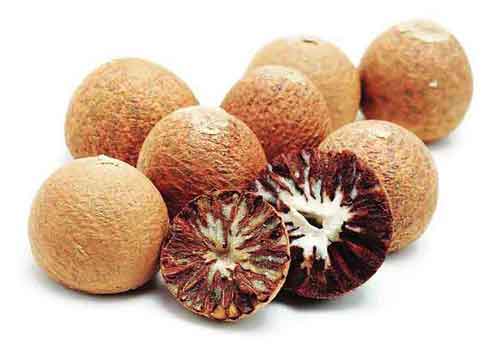
Pharmaceutical Name -Areca catechu | Plant Family -Arecaceae
Grades: Good Cut 100%, 80%, 60%, 50%, "Laali")
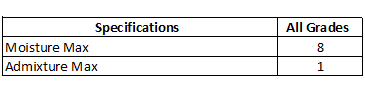
Arecanut is one of the most important commercial crops in Southeastern Asia. Arecanut, also popular by the name Betel Nut, is the fruit of the betel nut tree and is used worldwide for consumption and chewing purposes. In Asian countries, it is a popular cultural activity to chew Arecanuts for its stimulant properties and also it is used as an offering for many rituals and spiritual activities. The seeds have a high percentage of alkaloids in them that prove beneficial for health if consumed to a limited extent. The nut is cultivated among other palms in plantations and the tree as well as the nut has a never-ending list of uses - for chewing, as a vegetable, a medicine or stimulant and for timber, fuel wood, clothing, wrapping, lubricant, tannin etc.
Production wise, India tops the list of major betel nut producing countries followed by Indonesia and Myanmar. India, Pakistan & Bangladesh lead the major betel nut consuming countries.
Packing
As per customer requirement
Main Markets
India, Pakistan, Bangladesh , Mauritius & Yemen
CARDAMOM
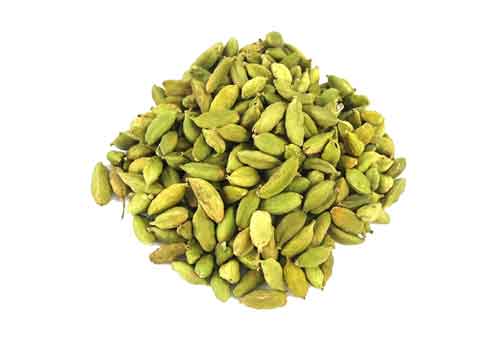
Popularly known as ‘Queen of Spices’ as opposed to Black Pepper hailed as ‘King of Spice’, Cardamom, sometimes spelt as cardamon or cardamum, is a spice made from the seeds of several plants in the genera Elettaria and Amomum in the family Zingiberaceae. Both genera are native to the Indian subcontinent and Indonesia. The cardamom plant is a perennial herbaceous plant with a pseudostem and thick irregular shaped rhizomes. Dried fruit or cardamom pod is traded as a spice.
Cardamom pods are spindle-shaped and have a triangular cross-section. The pods contain a number of seeds, which are small and black, while the pods differ in colour and size by species. Cardamom is generally available in the form of whole fruit as a primary product, in-ground form as secondary processed products and also in the form of extractions of oil and oleoresin as value-added products. Cardamom lands are generally termed as spice forests. Sri Lankan Cardamom suppliers export light green cardamom variety (Elettaria cardamomom), which is one of the most expensive spices by weight.Due to the unique flavour of green cardamom cultivated in Sri Lanka, formed by the country’s unique terroir, green cardamom produced in Sri Lanka is known as Ceylon Cardamom.
Ceylon Cardamom is available in various forms in the global market;
- The whole Cardamom is the whole pod, with seeds intact.
- Ground cardamom is the cardamom powder. Cardamom is usually known for having a reduction of flavour once the seeds are ground but is used in culinary recipes
- Cardamom oil is the essential oil derived from cardamom pods through steam distillation. Known for its uplifting and energizing fragrance, Cardamom oil has a therapeutic and aromatic blend. The clear and thin oil is ideal to blend with other oils and has a spicy, woody, and sweet aroma.
The country serves about 0.1% of the global demand for cardamom which amounts to 4000 to 5000t per annum. India, Australia, Canada and Estonia are the main buyers of Ceylon Cardamom, which is available in two grades; namely LG Lanka Green Cardamom (LG) and Lanka Light Green Cardamom (LLG).
In Sri Lanka, cardamom is mainly cultivated in the districts of Kandy, Matale, Kegalle, Nuwara Eliya, Ratnapura and a part of Galle. Three types of Cardamom are found in Sri Lanka and they’re categorized based on the shape of the inflorescence.
- Malabar – Inflorescence is prostate.
- Mysore – Inflorescence is vertical.
- Vazhukka- Inflorescence is inclined.
Consumption of cardamom has drastically gone up throughout the world during the last two decades. Cardamom is mainly consumed in the Middle Eastern countries, India, Pakistan, European countries, the USA, and Japan. In fact, Middle Eastern countries such as Saudi Arabia and the United Arab Emirates, and South-East Asian countries such as India, account for over 60% of the global consumption.
CINNAMON
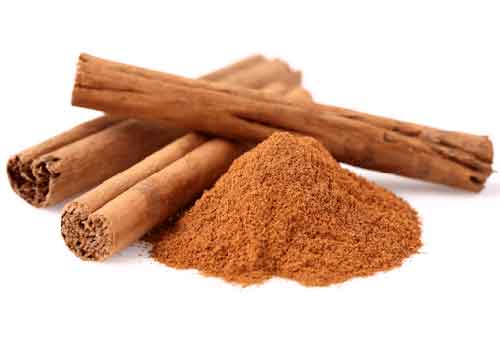
Pharmaceutical Name -Cortex Cinnamoni | Botanical -Cinamomum Zeylanicum Blume / Cinamomum Verum
Grades - Grade 1 (non-GMO), Grade 2 (non-GMO)
Cinnamon is a derivative from the bark of the aromatic perennial tree Cinnamomum Zeylanicum, native to Sri Lanka. Cinnamon has held the world under its power of fragrance and natural therapeutic properties for over centuries. Cinnamon has been produced and conserved in its original nature in Sri Lanka. Scientifically it has been revealed that Cinnamon is a natural treatment for Diabetes and Cardiovascular conditions.
Scraped peels of the inner bark of mature cinnamon shoots are joined together by overlaps, the hollow of which has been filled with small pieces of the same peel & thereafter dried first in the sun & then in the shade for curing.
Cinnamon are divided into many categories as per their diameter and sizes.
Packing
As per customer requirement
Main Markets
USA, Mexico, Peru, Colombia, Chile, Guatemala, Ecuador, Panama, Australia, Spain, Canada
